







Glass Storage Chip Fabrication: Cleanroom Class Requirements
Glass Storage Chip Fabrication: Cleanroom Class Requirements In semiconductor and electronics manufacturing, chip fabrication demands extreme environmental control—especially during wafer handling, photolithography, and glass substrate storage.
In semiconductor and electronics manufacturing, chip fabrication demands extreme environmental control—especially during wafer handling, photolithography, and glass substrate storage. Glass-based components like reticles, masks, and display-grade wafers are highly sensitive to particulate contamination, static discharge, and humidity fluctuations. A single micron-scale particle can cause fatal defects in sub-10nm node processes. That’s why cleanroom class requirements aren’t just compliance checkboxes—they’re foundational to yield, repeatability, and product reliability. Whether you’re scaling up a new fab line or retrofitting an existing facility, selecting the right clean room manufacturers, materials, and integrated systems directly impacts throughput and defect rates. This article outlines the practical cleanroom engineering criteria essential for glass storage and chip fabrication environments—including cleanroom classifications, material specifications like double glass window panes and glass partition wall cleanroom solutions, and critical infrastructure such as pharmaceutical clean room panels and China Modular cleanroom ceiling panels. We focus on real-world implementation—not theory—so you can make informed procurement decisions with trusted suppliers like Pharma-Tek.
Material Integrity & Contamination Control for Glass Handling Zones
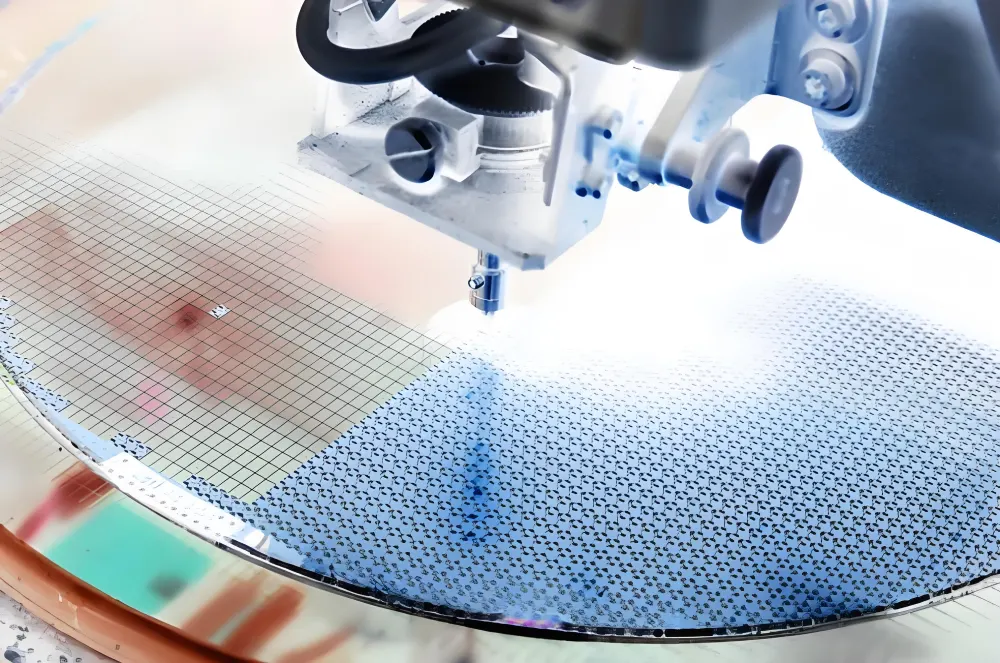
When storing or staging optical-grade glass substrates—such as fused silica masks or TFT-LCD mother glasses—surface integrity is non-negotiable. Even trace outgassing from conventional wall panels or adhesives can deposit volatile organic compounds (VOCs) onto glass surfaces, leading to coating inconsistencies or lithographic errors. That’s why leading fabs specify pharmaceutical clean room panels: non-porous, electrostatic-dissipative, and ISO 14644-compliant. These panels resist microbial growth, minimize particle shedding, and support seamless cleaning protocols. Equally important are glass panel clean room systems—modular, frameless, or semi-frameless assemblies using low-iron tempered glass with anti-static coatings. Such glass wall clean room configurations provide full visibility while maintaining Class 100 or better air integrity when paired with proper sealing and pressure differentials.
Ceiling systems must match this standard. Pharmaceutical cleanroom ceiling solutions—like gridstone cleanroom gypsum ceiling panels or China Modular cleanroom ceiling panels—offer smooth, joint-minimized surfaces that prevent dust accumulation and simplify HEPA filter integration. The grid hanging design enables rapid access to overhead utilities without compromising containment. For glass-intensive zones, consider grid hanging Design with integrated UV-resistant gaskets and stainless-steel suspension hardware—critical for long-term dimensional stability under constant lighting and thermal cycling. Doors also require precision: glass door of cleanroom units should feature dual-sealed double glass window panes, automatic closing mechanisms, and interlocked operation to prevent cross-contamination during high-frequency access. Suppliers offering glass door Factory customization—such as adjustable sightlines, embedded RFID readers, or laminar airflow shrouds—add measurable value in high-mix, low-volume production lines.
Don’t overlook passive infrastructure: cleaning station placement must align with material flow, and all surfaces—including glass partition wall clean room interfaces—must withstand IPA, hydrogen peroxide vapor (HPV), and other validated decontamination agents. When sourcing cleanroom supplies, prioritize vendors who certify material compatibility with semiconductor-grade chemistries—not just pharmaceutical standards. For example, Pharma-Tek’s Moving Laminar Hood Vehicle supports mobile glass transport under ISO Class 5 (Class 100) airflow, eliminating static buildup and turbulence-induced particle resuspension.
Class-Specific Engineering for Photomask & Reticle Storage
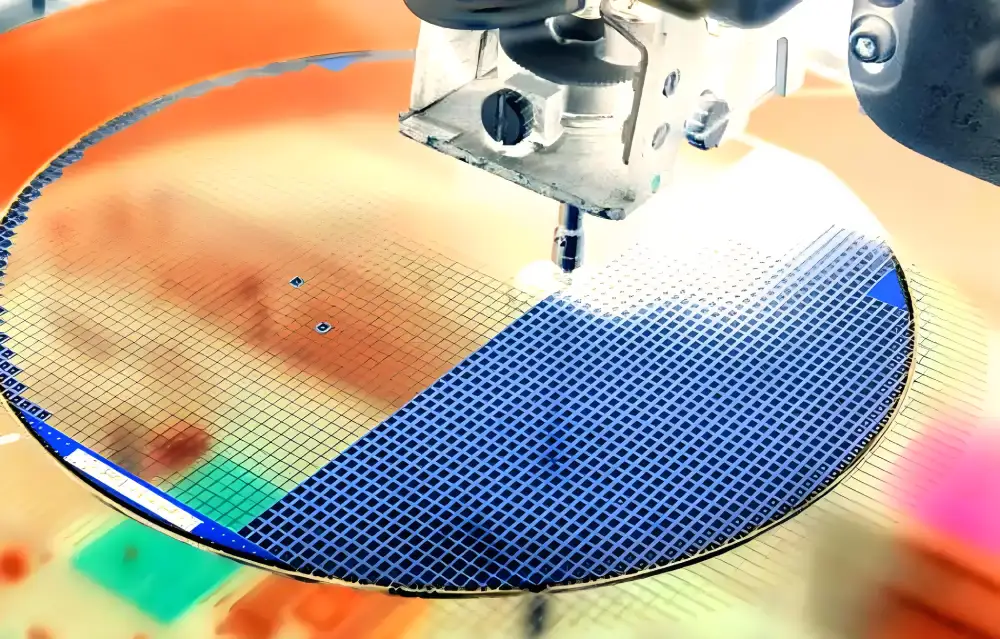
Photomasks and EUV reticles—often stored in nitrogen-purged cabinets within dedicated glass-handling suites—require the strictest environmental controls. A class 100 clean room (ISO Class 5) is the industry baseline here, with ≤100 particles ≥0.5 µm per cubic foot. But achieving and sustaining that level isn’t just about HEPA filtration; it’s about holistic clean room design. Every surface, seam, and transition point becomes a potential contamination vector. That’s where clean room classifications guide material selection: for instance, aluminum pass-box units (like Pharma-Tek’s Aluminum Pass Box) provide ISO Class 5 transfer between zones without requiring personnel gowning, reducing human error and gown lint generation. Their anodized finish resists abrasion and chemical etching—essential when passing glass carriers between litho bays and metrology labs.
For localized protection, cleanroom equipment such as laminar flow hoods must deliver uniform, unidirectional airflow at ≥0.45 m/s across the entire work surface. Pharma-Tek’s Clean Laminar Flow Hood meets this with NSF-certified airflow profiles and zero-turbulence plenums—ideal for mask inspection or glass bonding prep. Meanwhile, China Modular cleanroom doors with magnetic gaskets and soft-close dampers ensure pressure integrity remains intact even during high-cycle operations. These doors integrate seamlessly with glass door Design systems that include conductive edge trims and real-time differential pressure monitoring.
It’s also vital to distinguish between *ambient* classification and *localized* control. While the broader space may be Class 10,000 (class 10000 clean room), critical glass storage cabinets often operate at Class 1 (ISO Class 3)—achievable only with recirculating mini-environments and ultra-low-particulate air (ULPA) filtration. In such cases, acrylic clean booth enclosures (e.g., Pharma-Tek’s Acrylic Clean Booth) offer rapid deployment, visual verification, and easy validation—making them ideal for R&D labs or pilot lines handling next-gen glass substrates. Remember: clean room classification isn’t static—it must be verified quarterly via particle counters, airflow mapping, and filter integrity tests. Partner with clean room manufacturers who provide commissioning documentation, not just delivery.
Scalable Infrastructure for High-Volume Glass Wafer Production

As display and advanced packaging fabs scale toward Gen 10.5+ glass handling (2,500 × 3,000 mm substrates), traditional stick-built cleanrooms become cost-prohibitive and inflexible. That’s where China Modular Cleanroom systems deliver compelling ROI: factory-fabricated, pre-tested, and installed in weeks—not months. These systems use standardized China Modular cleanroom ceiling panels, China Modular cleanroom doors, and glass partition wall cleanroom modules—all engineered for rapid reconfiguration as process flows evolve. Unlike site-built alternatives, modular walls maintain consistent flatness and seal integrity across 12-meter spans—critical for preventing eddy currents that lift particles off large glass surfaces.
The glass door of clean room becomes a strategic asset here: automated sliding glass door units with integrated interlocks and traffic-light signaling reduce bottlenecks at high-throughput loading docks. Paired with grid hanging ceilings that support robotic overhead transport (OHT) rails, these systems enable fully automated glass cassette movement—from stockroom to coater to inspection—without manual intervention. For fabs evaluating long-term supply chain resilience, working with a glass door Factory that offers local technical support, spare-part warehousing, and firmware-upgradable controllers adds tangible uptime assurance.
Finally, don’t underestimate ancillary clean room supplies. Items like static-dissipative floor mats, non-shedding wipes, and validated vacuum systems must meet the same rigor as primary infrastructure. Even seemingly minor elements—like gridstone clean room gypsum ceiling panels used in support corridors—impact overall facility qualification if they shed gypsum dust into adjacent classified zones. Always verify third-party test reports (e.g., IEST-RP-CC003.4 for surface cleanliness) rather than relying on supplier claims alone. With global supply chains tightening, partnering with vertically integrated clean room manufacturers—who control panel extrusion, glass tempering, and cleanroom equipment assembly under one roof—ensures traceability, faster lead times, and unified warranty coverage.
FAQs
What cleanroom classification is required for storing EUV photomasks?
EUV photomasks demand ISO Class 3 (equivalent to class 100 clean room in older Fed-Std-209E terms) for ambient storage, but best-in-class fabs implement mini-environments inside nitrogen-purged cabinets rated at ISO Class 1. This requires ULPA filtration (99.9995% @ 0.12 µm), vibration isolation, and temperature/humidity control within ±0.3°C and ±1% RH. Critical supporting infrastructure includes double glass window panes with conductive coatings for ESD control and glass partition wall clean room systems that eliminate crevices where particles accumulate.
Can pharmaceutical clean room panels be used in semiconductor fabs?
Yes—but with caveats. Pharmaceutical clean room panels meet stringent non-shedding and cleanability standards, making them suitable for low-particulate semiconductor support areas (e.g., tool maintenance rooms, metrology labs). However, for front-end process zones, verify that panels comply with SEMI F21 standards for outgassing (TOC ≤ 1 µg/cm²) and surface resistivity (10⁴–10⁹ Ω/sq). Some Pharma-Tek pharmaceutical clean room panels are upgraded with carbon-loaded PVC skins and stainless-steel framing specifically for semiconductor use—confirm material certifications before specifying.
How do I validate a China Modular cleanroom for glass substrate handling?
Validation begins with factory acceptance testing (FAT): request airflow uniformity reports, particle challenge data for all filters, and weld integrity certificates for all aluminum frames. On-site, perform ISO 14644-1 certification at three operational states—‘as-built’, ‘at-rest’, and ‘operational’—using calibrated particle counters. For glass zones, add SMIC-qualified static decay testing (<100 ms) on all surfaces and helium leak testing on glass door of cleanroom seals. Finally, validate cleaning efficacy using ATP swabs on glass panel clean room surfaces before and after routine wipe-downs. Pharma-Tek provides full validation packages—including IQ/OQ documentation—for all China Modular cleanroom doors and ceiling systems.